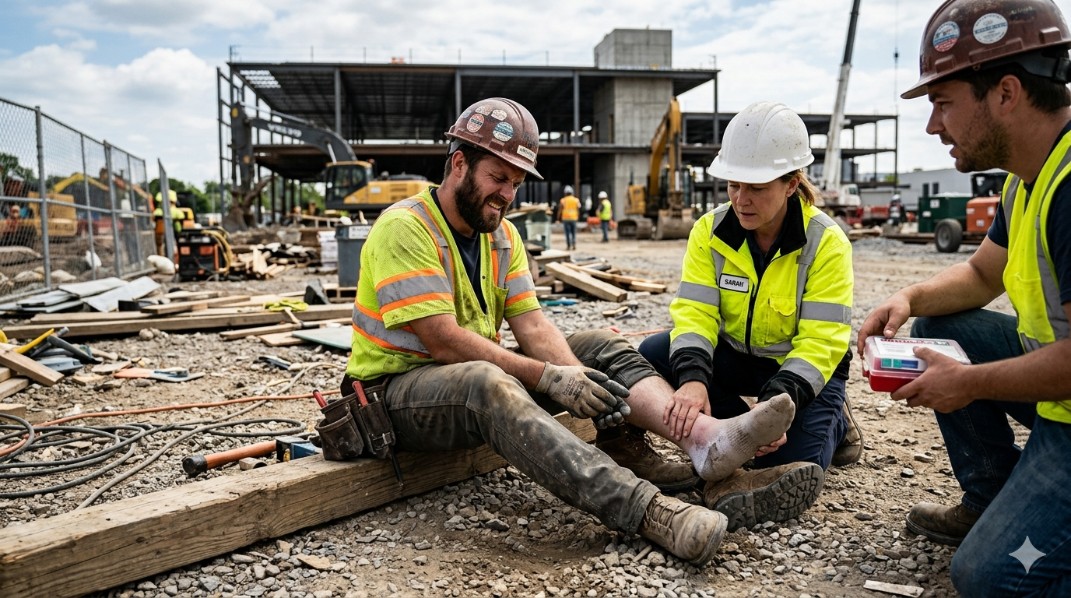
What Injured Workers in Washington Need to Know About the 2026 System
You’re lifting a box at a Kent distribution center when your back spasms. Or maybe you’ve developed chronic wrist pain after years at a Federal Way keyboard. Suddenly, you’re navigating doctor visits, lost wages, and forms that seem designed to confuse. If you’re trying to figure out what comes next, you’re not alone.
This guide cuts through the noise. We’ll walk you through Washington’s unique no-fault industrial insurance system, show you exactly how to file your claim, and flag the deadlines that can make or break your case. Whether you’re handling a straightforward workplace injury claim or facing a complex occupational disease claim, you’ll find the 2026 updates, benefit calculations, and practical steps you need to protect your income and medical care.
What Injured Workers in Washington Need to Know About the 2026 System
Washington operates differently than most states. Here, private workers’ comp insurance isn’t just uncommon—it’s prohibited under Washington law. Every employer must either purchase coverage through the State Fund administered by the Department of Labor & Industries (L&I) or receive certification to self-insure. This binary structure means your path to benefits depends entirely on which category your employer falls into.
When we say the system is “no-fault,” we mean exactly that. You don’t need to prove your employer did something wrong to receive benefits. If your injury or illness arose out of and in the course of employment, you’re generally eligible for medical and wage-replacement benefits regardless of who caused the accident. This is fundamentally different from personal injury lawsuits, which require proving negligence and are handled in civil court with different damages available.
Key entities you’ll encounter include L&I itself, which manages State Fund claims; the Board of Industrial Insurance Appeals (BIIA), an independent body that hears disputes; and the Report of Accident (ROA), the foundational document that starts your claim. For online filers, L&I offers FileFast, a portal for submitting initial reports electronically.
State Fund employers pay premiums to L&I, which then pays your benefits if you’re injured. Self-insured employers pay their own claims directly, though they operate under L&I oversight. Neither system is inherently better—they simply require different filing procedures. The critical first step is verifying which system covers you, as sending your paperwork to the wrong entity can delay benefits by weeks. You can check your employer’s status through L&I’s online lookup tools or by asking your HR department directly.
How to File a Washington L&I Claim: Step-by-Step Process
You have three ways to initiate a Washington L&I claim. First, you can file online through L&I’s FileFast system. Second, you can call the L&I claim intake center directly. Third—and most common—you can complete the Report of Accident at your doctor’s office, where the provider submits it on your behalf. All three methods create the same legal starting point, so choose whichever gets your injury documented fastest.
However, if your employer is self-insured, do not file with L&I. Instead, you must submit your claim directly to your employer or their Third-Party Administrator (TPA). Self-insured companies handle claims internally, though they must follow the same statutory benefit rules as State Fund claims. Filing with the wrong administrator is one of the most common errors that pauses compensation.
Once filed, your treating provider has five days to submit the initial report to the appropriate administrator. If you’re eligible and no additional information is required, L&I’s guidelines specify that first time-loss payments should issue within 14 days of receiving the report. This 14-day clock only starts if your documentation is complete—missing wage information or employer data can stop it cold.
Importantly, your first medical visit for a workplace injury is covered even if the claim hasn’t been approved yet. This allows immediate treatment for acute injuries while the administrative review continues. For occupational disease claims—those developing over time from repetitive stress or chemical exposure—the same filing methods apply, though the timeline for establishing causation typically takes longer given the need for medical opinions on work-relatedness.
State Fund vs. Self-Insured Filing Paths
State Fund Path:
- Initial report goes to: L&I
- Check status via: My L&I portal
- Benefits issued by: L&I
Self-Insured Path:
- Initial report goes to: Employer/TPA directly
- Check status via: Employer’s claim portal or designated contact
- Benefits issued by: Employer/TPA
Both systems provide the same statutory benefits, but communication flows through different channels. Confirm your path before filing.
Document Readiness Checklist
Before filing your Report of Accident, gather:
- Wage information: Recent pay stubs and dependent details (affects benefit rate)
- Employer data: Legal business name, address, and your supervisor’s contact
- Treating provider: Name, address, and phone of the doctor who first treated you
- Incident specifics: Date, time, location, and brief description of how the injury occurred
- Witness contacts: Names of anyone who saw the incident
Incomplete documentation pauses the 14-day payment calculation until the missing pieces arrive.
Critical Deadlines: Washington Claim Filing and Appeal Time Limits
Missing a deadline in Washington’s industrial insurance system can permanently bar your claim. Here is the complete deadline stack you must calendar:
| Deadline Type | Time Limit | Legal Basis |
|---|---|---|
| Injury Claims | 1 year from injury date | RCW 51.28.050 |
| Occupational Disease Claims | 2 years from receiving written notice from a physician | RCW 51.28.055 |
| Protests to L&I | 60 days (15 days for vocational decisions) | WA L&I Protest Guidelines |
| Appeals to BIIA | 60 days from date the order is communicated/received | RCW 51.52.060 |
| Provider Repayment Appeals | 20 days | RCW 51.52.060 |
The distinction between injury and occupational disease timelines proves critical for repetitive stress or chemical exposure cases. While a fall gives you one year from the specific incident, a gradually developed condition like carpal tunnel or chronic respiratory illness allows two years from the date you receive written notice from a physician that your condition is an occupational disease and a claim may be filed.
When L&I issues a decision you disagree with—whether denying the claim outright, closing medical treatment, or setting a lower disability rating—you face a strategic choice. You may file a protest directly with L&I within 60 days, asking the department to reconsider based on new evidence or legal error. Alternatively, you may appeal directly to the BIIA without first protesting to L&I.
Protesting to L&I keeps the claim within the agency that knows the file but may involve longer administrative processing. Going directly to BIIA brings the dispute before an independent judge sooner but requires careful preparation of the record. The 60-day BIIA window is jurisdictional—miss it, and the decision becomes final regardless of merit. Vocational rehabilitation decisions protested to L&I carry only 15 days, so review those determination letters immediately upon receipt.
Understanding Your Benefits: From Medical Care to Wage Replacement
Workers’ compensation benefits in Washington fall into two primary categories: medical treatment and wage replacement. L&I covers necessary and proper medical care related to your accepted condition, including hospitalization, surgery, medication, and rehabilitation services. You generally have the right to choose your attending provider, though switching doctors requires following specific notification rules to ensure continuity of care.
Time-loss benefits replace a portion of your wages while you’re medically unable to work. The calculation runs 60% to 75% of your wages, depending on your marital status and number of dependents at the time of injury. These payments are subject to statutory minimums and maximums that adjust annually, so high-wage earners may receive less than 60% of their actual gross pay while low-wage workers receive the floor amount.
Critical for financial planning: the three-day waiting period. L&I does not pay time-loss for the first three days of disability unless your disability continues through the seventh day. If you’re out seven or more days, those first three days become payable retroactively. Note that for dates of injury before June 6, 2024, different waiting period rules may apply based on the law in effect at that time.
Beyond temporary wage replacement, you may eventually face claim closure decisions involving Permanent Partial Disability (PPD) awards for lasting physical impairment, pension benefits if you cannot return to any gainful employment, or a Claim Resolution Settlement (CRS) for certain older claims. If your claim closes but you still need treatment, you may need to reopen the claim or protest the closure order before the deadline—treatment after closure typically requires proving a worsening of the original condition or an error in the closure order.
2026 Updates: Rate Changes and Legislative Developments
Washington’s 2026 brings specific changes to the industrial insurance system. Understanding whether a change is already law, merely announced, or still pending helps you anticipate impacts on your claim.
| Status | Change | Effective Date | Details |
|---|---|---|---|
| Enacted | RCW 51.32.060 Update | July 1, 2026 | Revised permanent total disability pension schedules tied to family status |
| Announced | 4.9% Average Rate Increase | January 1, 2026 | System-wide premium adjustment; approximately $1.37/week per full-time employee |
| Proposed | SB 6136 | TBD (Senate passed Feb 10, 2026) | Would require publication of actuarially indicated rates by risk class |
The enacted update to RCW 51.32.060 modifies how permanent total disability pensions calculate monthly benefits based on family status factors. This affects only workers determined totally unable to return to any employment, distinct from temporary time-loss or PPD awards.
The announced 4.9% average premium increase translates to roughly $1.37 per week per full-time employee across the system. According to L&I’s November 2025 announcement, employers pay approximately 75% of premiums while workers pay roughly 25% on average. These rate changes finance the overall system but do not alter eligibility rules, benefit calculations, or medical authorization procedures for individual claims. Your ability to secure treatment or time-loss depends on medical evidence and statutory criteria, not premium adjustments.
SB 6136, which passed the Senate on February 10, 2026, remains proposed law. If enacted, it would mandate publication of actuarially indicated rates by risk classification. Until the House acts and the Governor signs, this remains prospective only.
The July 1, 2026 Permanent Total Disability Schedule
RCW 51.32.060 specifies that beginning July 1, 2026, permanent total disability pensions will use revised percentage schedules tied specifically to family status. These pensions apply when a worker cannot return to any gainful employment due to the injury. The new schedule changes the benefit calculation framework but does not affect temporary time-loss rates or Permanent Partial Disability (PPD) awards. If your claim involves catastrophic, total disability, ensure your attorney or representative accounts for these new percentages when projecting long-term benefits.
Common Mistakes That Delay or Deny Washington Workers’ Comp Benefits
Even valid workers’ compensation claims fail when procedural errors trip up the injured worker. First, missing the statutory filing windows—one year for injuries, two years for occupational diseases—permanently extinguishes the right to benefits regardless of injury severity. Calendar these dates immediately.
Second, confusing the State Fund and Self-Insured pathways causes significant delays. If you work for a self-insured employer like certain large retailers or manufacturers but file your Report of Accident with L&I, weeks may pass before anyone realizes the error. Always verify your employer’s coverage status before submitting paperwork.
Third, workers’ compensation claimants often fail to account for the three-day waiting period in their financial planning. If you expect immediate wage replacement and your disability resolves before day seven, you receive no time-loss for those first three days. Budget accordingly.
Fourth, missing the 60-day protest or appeal windows allows incorrect claim closures or denials to become permanent. When you receive a decision letter, note the specific deadline immediately—15 days for vocational decisions, 60 days for most other matters.
Finally, incomplete intake documentation repeatedly pauses the 14-day first-payment clock. Refer back to the Document Readiness Checklist: missing employer information, wage details, or dependent data forces administrators to request supplements, stopping the payment timeline until you respond.
When to Consult a Workers Compensation Attorney in Bellevue or Federal Way
Complex claims often require legal guidance to navigate procedural traps. A workers compensation attorney helps manage deadline stacks, prepare BIIA appeals, and challenge adverse medical opinions through proper legal channels. If your claim involves willful misconduct allegations, occupational disease causation disputes, or permanent total disability determinations, early counsel prevents costly errors.
Understanding the boundary between workers’ compensation and civil liability matters for Washington workers. While workers’ comp provides no-fault benefits, it generally bars lawsuits against employers for negligence. However, if a third party caused your injury—such as a negligent driver who hit you while you were making deliveries—you may maintain both a workers’ compensation claim and a personal injury lawsuit against that driver. This is particularly relevant for car accident claim in Washington scenarios involving commercial drivers, delivery personnel, or traveling employees. The workers’ comp claim covers immediate medical and wage benefits, while the personal injury claim may recover damages for pain and suffering not available in the administrative system.
The BIIA appeal process involves specific steps including a 60-day grant/deny window, potential mediation, and formal hearings. An attorney familiar with these steps can ensure your appeal includes the specific order being challenged, the grounds for the appeal, and all required contact information within the strict filing window.
Wrongful death WA claims present similar complexity. Depending on fault and beneficiary status, survivors may pursue benefits through the workers’ compensation death benefit system, civil wrongful death litigation, or both. The industrial insurance system provides specific statutory benefits to surviving spouses and dependents, but if a third party caused the fatal incident, additional civil remedies may exist.
For workers in King County, consulting a lawyer familiar with personal injury in Federal Way or Bellevue provides dual advantages: knowledge of local medical providers who accept industrial insurance patients and familiarity with statewide L&I procedure. Whether you’re filing an initial claim in Renton or appealing to the BIIA after a denied surgery in Auburn, local counsel understands both the administrative mechanics and the regional medical landscape.
Next Steps: Protecting Your Claim and Maximizing Recovery
Immediate action protects your rights. First, verify your employer’s insurance status—State Fund or Self-Insured—using L&I’s online lookup or HR department. Second, gather wage documentation and dependent information immediately; you’ll need these for accurate benefit calculations. Third, file your Report of Accident through the correct channel (L&I FileFast for State Fund, employer directly for Self-Insured).
Once filed, monitor the 14-day payment window. If you don’t receive confirmation of claim receipt or a time-loss payment within two weeks, follow up with your claim manager. Simultaneously, calendar all deadline stacks: the one-year injury claim limit, two-year occupational disease limit, and 60-day protest/appeal windows.
When deciding between protesting to L&I or appealing directly to the BIIA, consider whether you have new evidence to present. Protests allow L&I to correct errors administratively, while BIIA appeals bring independent judicial review. A BIIA appeal filing must include the specific order being challenged, the grounds for appeal, and your contact information, filed within the 60-day window. For complex disputes or high-value permanent disability claims, consult counsel before choosing your path.
Finally, bookmark L&I’s claim resources and the BIIA appeal guidance for ongoing updates. The 2026 legislative session may bring additional changes, and staying informed ensures you meet every requirement to secure your benefits.
You now have the roadmap: file through the correct channel, watch your calendars, and understand that workers’ comp replaces wages partially while covering necessary medical care. Whether you’re handling a straightforward sprain or a complex occupational disease, the difference between a smooth claim and a denied one often comes down to documentation and deadlines.
If you’re facing a denied claim, a dispute over benefits, or simply need help navigating the 2026 system changes, speaking with a qualified advocate can protect your financial future. Take the next step today: gather your documents, verify your employer’s coverage status, and ensure your claim receives the attention it deserves.