Infrared Patio Heaters: Engineering Outdoor Comfort for All-Season Lounges
Picture this: It is a crisp October evening, the sun has dipped below the horizon, and your guests are reaching for their jackets instead of refilling their wine glasses. You invested in beautiful outdoor furniture and landscape lighting, yet your patio sits empty half the year because the chill drives everyone inside. This scenario plagues homeowners across the United States who want to maximize their outdoor living investments. Infrared patio heaters offer a scientifically grounded solution that extends your backyard season without building walls. By understanding thermal comfort principles and selecting the right equipment, you can transform breezy decks and covered porches into cozy, year-round retreats.
Understanding Outdoor Thermal Comfort
Comfort outdoors is not simply about the thermometer reading. ASHRAE Standard 55 defines thermal comfort through six interacting factors: air temperature, thermal radiation, humidity, air speed, metabolic activity level, and clothing insulation. This framework explains why you might feel chilly at 70°F with a strong breeze, yet perfectly comfortable at 65°F in calm, sunny conditions.
Traditional convection heating systems struggle in outdoor environments because they attempt to warm the air itself. In open or semi-open lounges, that heated air rises and dissipates immediately, carried away by even gentle winds. You end up paying to heat the atmosphere while your guests still shiver. Radiant heat operates on a fundamentally different principle. Instead of warming air molecules, infrared heaters transfer energy directly to people, furniture, and surfaces within the beam angle. This direct energy transfer bypasses air movement entirely, delivering warmth that feels immediate and consistent regardless of ambient airflow.
The distinction matters profoundly for outdoor comfort. When you step into the warming zone of a properly specified radiant system, your body absorbs infrared energy at the skin and clothing level, which then warms your core temperature. Roberts-Gordon notes that this approach keeps patrons and furnishings warm rather than attempting to condition the surrounding atmosphere. For thermal design in outdoor lounges, this means you can achieve comfortable conditions even when the mercury drops and the wind picks up, provided you address the radiant component of the comfort equation.
How Infrared Heating Transforms Outdoor Living
Infrared heating for patios operates through electromagnetic wave transfer rather than convective air movement. The mechanism is similar to sunlight warming your skin on a cold winter day; you feel the heat despite the surrounding air temperature. This physics principle makes infrared systems exceptionally effective in breezy, open, or semi-open outdoor rooms where traditional forced-air solutions would fail completely.
Design Builders confirms that infrared heaters work effectively in breezy, open or semi-open outdoor rooms because they heat people and surfaces directly rather than attempting to warm the air. This characteristic allows you to create comfortable microclimates under pergolas, within screened porches, beneath awnings, or above outdoor kitchen islands without enclosing the space with walls or windows. The technology supports true all-season patio lounge usage by establishing defined warming zones that remain stable even when wind gusts move through the area.
Installation contexts vary widely based on your architecture. Covered patios with overhead structures accommodate suspended or ceiling-mounted units that cast heat downward onto dining areas. Screened porches benefit from wall-mounted or linear tube systems that distribute warmth across seating arrangements. Even open-air decks can utilize infrared technology when combined with strategic wind breaks and proper mounting heights. Roberts-Gordon indicates that infrared tube heaters can be installed under awnings, patios, and covered areas, expanding the possibilities for backyard heating in diverse architectural settings. The result is a heated outdoor space that maintains its open-air character while delivering the comfort typically reserved for indoor living rooms.
Comparing Heater Types and Fuel Systems
Selecting the right equipment requires understanding both physical configurations and energy sources. The backyard heating market offers two primary form factors, each suited to different spatial layouts and social patterns. Additionally, your choice between propane, natural gas, and electric power affects installation complexity, operating costs, and compliance requirements under standards like CSA/ANSI Z83.26:20.
Mushroom vs. Linear Infrared Configurations
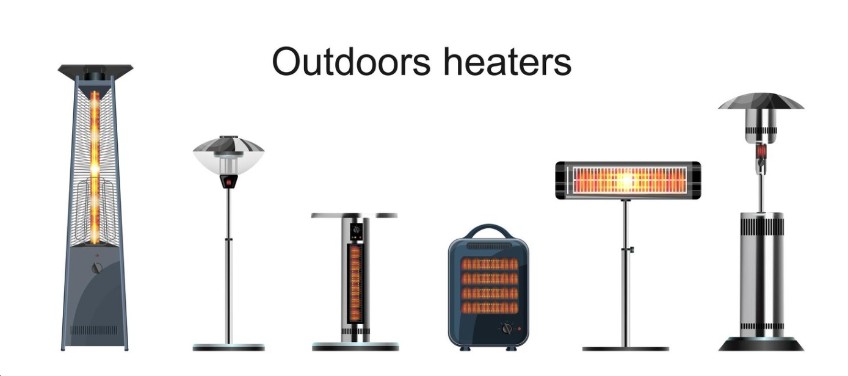
Dome-style mushroom heaters remain popular for their recognizability and portability, typically projecting a circular heat zone of approximately 10–12 feet in diameter according to AEI Corporation specifications. These units concentrate warmth directly beneath the cap, making them ideal for spot heating specific dining tables or conversation nooks. Linear tube or panel systems, conversely, distribute heat across elongated rectangular zones, better suited for bench seating, bar areas, or long dining tables. Linear configurations often mount overhead along beams or walls, preserving floor space and eliminating tripping hazards while providing more uniform coverage across larger footprints.
Propane, Natural Gas, and Electric Power
Fuel selection involves infrastructure trade-offs. Propane units offer mobility and require only a cylinder exchange program, though you must manage tank storage and replacement cycles. Natural gas heaters connect to permanent utility lines, delivering continuous operation without cylinder handling but requiring professional plumbing installation. Electric systems demand adequate circuit capacity—typically 240V for high-output units—but offer precise control and no combustion byproducts. CSA/ANSI Z83.26:20 specifies that tabletop patio heaters carry a limit of 24,000 Btu/hr (7034 W), an important specification when comparing output ratings across fuel types. Gas-fired units generally deliver higher BTU outputs suitable for open areas, while electric excels in covered spaces where ventilation concerns limit combustion options.
Mounting Strategies and Spatial Planning
Effective patio heater design integrates seamlessly with your architecture while maintaining strict safety clearances. CSA/ANSI Z83.26:20 recognizes five mounting configurations: suspended overhead, angle-mounted overhead, wall-mounted, floor-mounted/pole, and tabletop. Each approach offers distinct advantages for specific ceiling heights, seating arrangements, and traffic patterns.
Ceiling height significantly impacts performance; higher installations require greater output wattage or BTU ratings to deliver equivalent warmth at seated levels. Spatial planning must account for both seated and standing positions, ensuring that head clearance remains adequate while heat distribution covers the target zone. The U.S. Consumer Product Safety Commission (CPSC) recommends keeping portable heaters at least three feet away from drapes, furniture, bedding, and other combustibles, a critical consideration when positioning freestanding units near outdoor sofas or dining sets.
Overhead and Wall-Mounted Configurations
Permanent overhead mounting suits covered patios and pergolas with adequate structural load capacity. These installations require careful attention to clearance from combustible materials above and to the sides, typically specified by the manufacturer based on output intensity. Wall-mounted units work well under deep soffits or on adjacent house walls, angling heat toward seating areas while remaining above head height. Both configurations benefit from professional structural assessment to ensure beams or joices can support the heater’s weight and any ice loading in colder climates.
Portable, Pole, and Tabletop Limitations
Freestanding options provide flexibility for changing layouts but introduce specific constraints. CSA/ANSI Z83.26:20 restricts tabletop units to outputs of 24,000 Btu/hr (7034 W) or less, limiting their warming capacity to intimate dining settings. Pole-mounted and portable units require stable, level surfaces away from foot traffic paths. Propane.com emphasizes keeping heaters away from foot traffic and maintaining at least five-foot clearance from exits to prevent obstruction and tipping hazards. When using portable electric units, remember that The CPSC notes that portable electric heaters are involved in an average of 1,100 residential fires each year, underscoring the importance of stable placement and tip-over switches.
USA Safety Standards and Code Compliance
Navigating safety certifications ensures your heated outdoor space protects both property and occupants. In the United States, gas-fired and electric systems fall under distinct regulatory frameworks with specific testing requirements and certification marks.
CSA/ANSI Z83.26:20 applies to newly produced gas-fired outdoor infrared patio heaters, covering units utilizing natural gas or propane for residential or nonresidential installation. This standard addresses combustion safety, ventilation requirements, and structural integrity across the five mounting configurations. For electric heaters, UL 1278 is the Standard for Movable and Wall- or Ceiling-Hung Electric Room Heaters, covering equipment rated 600 volts or less.
When shopping, look for certification marks including ETL Listed (cETLus), UL 2021, and CSA C22.2 No. 46-13, which indicate independent testing to recognized safety protocols. These certifications verify that the unit has undergone rigorous evaluation for electrical safety, tip-over protection, and clearance requirements.
Gas-Fired Heater Standards (Z83.26)
CSA/ANSI Z83.26:20 establishes the baseline for gas heater safety, addressing fuel types and mounting method approvals. The standard covers everything from high-output suspended units to the tabletop limitations mentioned earlier. Compliance ensures that the heater properly vents combustion gases, maintains flame stability in outdoor wind conditions, and includes automatic shutoff features for tilt or oxygen depletion. When reviewing gas options, verify that the product literature specifically cites compliance with Z83.26:20 rather than generic ANSI standards.
Electric Heater Certifications and Clearances
Electric outdoor comfort solutions must carry UL 1278 certification for movable and wall/ceiling-hung configurations. This standard sets safety expectations for grounding, cord durability, and moisture protection. Unlike gas units, electric heaters do not produce combustion byproducts, but they require robust weather sealing and GFCI protection when installed in damp locations. The CPSC guidance regarding three-foot clearances from combustibles applies equally to electric portable models, preventing ignition of outdoor cushions, umbrellas, or dry vegetation.
Environmental Controls and Weather Resistance
Creating a truly all-season patio lounge requires addressing Mother Nature’s variables beyond temperature. Weather resistance and intelligent controls separate professional-grade installations from temporary solutions.
Ingress Protection (IP) ratings indicate a unit’s ability to withstand dust and moisture. Aura Heaters states that its patio heaters designed for exposed environments utilize IP65 protection, signifying complete dust ingress protection and resistance to low-pressure water jets from any direction. This rating ensures your investment survives rain, snow, and power washing without electrical compromise.
Wind exposure mapping represents a critical yet often overlooked aspect of thermal design. Prevailing winds can strip radiant heat from surfaces just as readily as convective warmth. Strategic placement should consider seasonal wind patterns, utilizing architectural elements or landscape features to create microclimates that reduce air velocity across the warming zone.
Zoning and controls dramatically impact both comfort and operating costs. Individual zone controls allow you to heat only occupied sections of a large patio, reducing energy consumption by 30–50% compared to full-area heating. Digital timers, dimmer-style output controls, and smartphone integration enable precise management of your heated outdoor space, ensuring you never pay to heat empty chairs. These environmental controls connect directly to thermal design principles, allowing you to manage heat loss in breezy conditions by adjusting output rather than enclosing the space.
Planning Your All-Season Patio Installation
Translating technical knowledge into a functional installation requires systematic planning that balances fuel logistics, safety protocols, and spatial flow. Begin by mapping your primary seating and circulation areas, then select mounting locations that maximize radiant coverage while respecting clearance requirements.
Fuel logistics present the first major decision point. Propane systems require storage for 20-pound cylinders or larger stationary tanks, plus a safe exchange pathway that avoids carrying heavy tanks through living spaces. Natural gas demands trenching for supply lines and potential meter upgrades, though the convenience of continuous fuel often justifies the upfront investment. Electric installations need load calculations to ensure your panel can handle the additional amperage, particularly if you plan multiple zones.
Safety-first layout strategies must incorporate Propane.com’s guidance to never use outdoor heaters indoors or in enclosed spaces, maintaining at least five-foot clearance from building exits to prevent egress obstruction. For portable units, remember to shut off the heater before moving it and keep the unit away from high-traffic pathways where guests might trip or bump the unit.
Actionable next steps include measuring your target heating area, calculating required BTU output based on exposure and ceiling height, and consulting a licensed contractor for gas or electrical connections. Review local building codes, as some jurisdictions require permits for permanent gas installations or electrical work. With proper planning, your outdoor comfort solution will provide years of extended-season enjoyment while maintaining the aesthetic and functional integrity of your landscape design.
Conclusion
Infrared patio heaters bridge the gap between seasonal landscaping and year-round living spaces. By understanding the six factors of thermal comfort and selecting equipment matched to your specific mounting constraints, you create an all-season patio lounge that defies traditional weather limitations. Remember to prioritize safety certifications like CSA/ANSI Z83.26:20 for gas units and UL 1278 for electric models, maintain proper clearances from combustibles, and implement zoning controls to optimize operating costs. Whether you choose a mushroom-style propane heater for flexibility or a permanent natural gas linear system for seamless integration, the technology exists to keep your outdoor living space comfortable through autumn’s chill and winter’s bite. Start by assessing your space’s wind exposure and fuel accessibility, then consult with certified installers to engineer your perfect outdoor comfort solution.