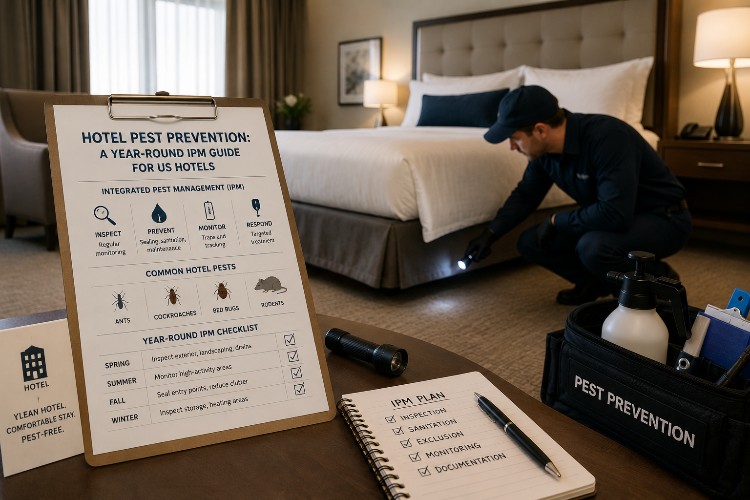
Hotel Pest Prevention: A Year-Round IPM Guide for US Hotels
Imagine a guest discovering rodent droppings in the corner of your lobby or waking to find bed bugs in their suite. For hoteliers, this scenario represents more than a housekeeping issue—it is an immediate threat to your brand, your revenue, and your legal standing. A single negative review about pests can reduce occupancy rates for weeks, while health code violations can trigger costly fines and mandatory closures. This guide provides a science-based, operations-focused framework for protecting your property through Integrated Pest Management (IPM), offering practical protocols for every department and season.
What Is Integrated Pest Management for Hotels?
Integrated pest management hotels operate under a fundamentally different philosophy than traditional extermination services. According to the CDC Environmental Health Services, IPM is a science-based approach that focuses on pest prevention, pest reduction, and eliminating the conditions that lead to infestations before they start. This framework stands in sharp contrast to reactive “spray-only” programs that wait for pests to appear and then blanket areas with chemicals.
The EPA outlines three operational principles that translate directly to hospitality settings: don’t attract pests, keep them out, and get rid of them—if you’re certain you have them—using the safest, most effective methods available. Proactive pest prevention means removing food sources, sealing entry points, and conducting continuous monitoring rather than relying on scheduled pesticide applications. Reactive pest control, conversely, treats symptoms after damage is done, often disrupting guests with chemical odors, room closures, and visible traps.
For hotels, IPM is not just preferable—it is essential. The framework protects against reputational damage from online reviews, reduces liability for health code violations, and ensures compliance with strict FDA Food Code requirements in breakfast areas and kitchens. By prioritizing monitoring and physical controls over chemical treatments, you minimize guest disruption while maintaining higher safety standards. This makes IPM the only sustainable model for hotel pest management in today’s competitive hospitality market. When implementing these strategies, partnering with experienced professionals like Pest Control Technicians, Inc. ensures your program meets rigorous environmental and safety standards from day one.
The Three Pillars of Hotel IPM
The CDC’s framework breaks down into three actionable pillars for your operations. Sanitation protocols eliminate food and water sources through rigorous cleaning schedules and waste management. Exclusion maintenance focuses on sealing entry points—installing door sweeps, repairing screens, and caulking gaps around utilities. Treatment hierarchies mandate that you use physical and mechanical controls, such as traps or heat treatment, before considering chemical interventions. This structured approach ensures every department understands their role in keeping the property pest-free.
Why Hotels Need Prevention-First Programs
Prevention-first programs deliver tangible business outcomes beyond pest absence. According to EPA guidance, removing conditions that attract pests prevents the cycle of infestation that leads to emergency treatments and room closures. For hospitality, this translates directly to reputation protection—avoiding the negative reviews that follow even a single sighting. It also reduces liability exposure and ensures compliance with FDA Food Code standards in food service areas, all while minimizing the disruption that comes with reactive spraying during peak occupancy periods.
Common Pest Threats and High-Risk Areas in US Hotels
Understanding where pests originate prevents costly surprises in US hotels. The “big three”—bed bugs, rodents, and cockroaches—account for the majority of pest infestation solutions hotels must deploy, alongside persistent flies and ants. Each threat maps to specific high-risk zones within your property. Guest rooms present the highest visibility risk, particularly around beds, furniture, and luggage racks where bed bugs hide. Laundry rooms combine heat and moisture that attract cockroaches and rodents seeking harborage. Kitchens and breakfast areas provide concentrated food sources that violate FDA Food Code standards if not properly managed. Loading docks and dumpsters serve as primary entry vectors, while mechanical rooms with utility penetrations offer rodents highway access to upper floors via pipe chases and conduits.
Pests rarely remain confined to their entry points. Bed bugs spread between rooms via housekeeping carts and guest luggage, making early detection critical before they infest adjacent units. Rodents travel along utility lines from mechanical rooms to guest floors, exploiting the vertical infrastructure of multi-story buildings. Cockroaches migrate from kitchens to vending areas and staff break rooms, following water sources and food scraps. Effective hospitality pest control requires understanding these movement patterns and establishing barriers at every transition point, with monitoring tuned to these specific risk zones.
Bed Bug Biology and Spread Patterns
Despite their traumatic reputation, CDC guidance confirms bed bugs do not spread disease. However, management requires strict protocols. Confirmation must come from insect identification—finding adults, nymphs, or eggs—rather than bite diagnosis, as CDC DPDx notes that skin reactions alone are not diagnostic. High-harborage zones include mattress seams, box springs, headboards, and cracks in bed frames, where these pests remain within eight feet of sleeping areas while potentially spreading to adjacent rooms through wall voids and electrical outlets.
Rodent Entry Vectors and Harborage
Rodents exploit surprisingly small openings. Industry standards establish that mice can squeeze through gaps as small as a pencil width—one-quarter inch or six millimeters. The CDC advises sealing any hole larger than a nickel to prevent entry. Common hotel entry points include gaps beneath loading dock doors, utility penetrations for plumbing and electrical lines, damaged screens on ground-floor windows, and threshold gaps on exterior doors. Once inside, rodents establish harborage in wall voids, behind kitchen equipment, and in storage areas with cardboard accumulation, typically within 10 to 30 feet of food sources.
Developing a Year-Round Pest Management Calendar
Sustainable pest control operates on a rhythm, not a reaction. Developing a year-round pest management hotels calendar means treating IPM as a cyclical maintenance discipline rather than an emergency service. During off-peak occupancy periods—typically January through March and September through November in most US markets—schedule deep inspections, structural repairs, and intensive staff training without disrupting revenue-generating guests.
Your calendar should include monthly tasks: checking monitoring devices in mechanical rooms and kitchens, inspecting dumpster areas for seal integrity, and reviewing vegetation management to eliminate pest highways. Quarterly exclusion audits examine door sweeps, window screens, and utility penetrations for new gaps created by building settling or weather damage. For bed bugs specifically, rooms should undergo thorough inspections during every turnover, with deep inspections quarterly in high-risk zones. Semi-annual reviews assess vendor service reports and update emergency response protocols before peak season arrivals.
The EPA emphasizes that building IPM requires continuous monitoring rather than one-time treatments. This means maintaining trend logs of all pest sightings, tracking seasonal patterns, and adjusting sanitation schedules based on occupancy fluctuations. For multi-property portfolios, standardize these calendars across all locations to ensure consistent brand protection and simplify vendor management. Digital documentation systems allow regional managers to verify completion across dozens of properties without visiting each site physically, ensuring consistent implementation of your hotel pest prevention strategy.
Seasonal Priorities for Hotel Operations
Align your intensity with your occupancy. During low-occupancy months, focus on structural sealing, deep sanitation behind fixed equipment, and upgrading to pest-proof waste containers. These disruptive tasks require empty rooms or closed kitchens. During high-occupancy periods, shift to heightened monitoring—checking interceptor traps weekly rather than monthly—and ensure rapid response readiness with pre-approved emergency vendor contacts. Maintain guest communication protocols that address concerns discreetly without alarming neighboring rooms or creating lobby congestion.
Bed Bug Prevention and Detection Protocols
Bed bugs demand your most rigorous protocols. Following EPA inspection guidance, housekeeping should examine mattress seams for rusty or reddish stains, dark excrement spots that bleed like marker ink, tiny eggs or eggshells approximately one millimeter in size, and live bugs hiding in tags, box springs, headboards, and bed frame cracks. These inspections should occur during every room turnover, not just quarterly deep cleans, to catch introductions before they establish.
Proactive measures form your first defense. Install mattress and box spring encasements to eliminate harborage and simplify detection. Place bed leg interceptors under each post—these traps monitor for activity while preventing bugs from climbing to sleeping areas. Train front desk staff to use a standardized intake form when guests report concerns, noting specific locations of suspected activity and timing of discovery. Critical to this process is the CDC DPDx guidance that bite reactions are not diagnostic; only confirmed insect identification warrants room closure and treatment.
Upon suspected sightings, immediate response protects your brand. Isolate the room but do not move furniture or linens to adjacent areas—these items may carry eggs. Document conditions with photographs showing specific locations of evidence. Contact your pest management partner for same-day verification before treating adjacent rooms preventively. Follow EPA recommendations by combining heat treatment preparation with non-chemical controls before applying targeted pesticides only to confirmed harborage areas. Communicate discreetly with affected guests, offering room moves and laundry services without publicizing the issue in corridors.
Housekeeping Inspection Checklists
Translate EPA guidance into actionable nightly protocols. During turnover, inspect headboard seams and screw holes where bed frames meet walls. Examine box spring corners and tags, flipping mattresses quarterly to check undersides. Inspect upholstered furniture—particularly desk chairs and sofa seams—and metal luggage racks where straps meet frames. When evidence is found, photograph with a coin or ruler for scale, capturing the specific location and adjacent structural elements for your maintenance team.
Non-Chemical Control Measures
Prioritize EPA-recommended physical controls before chemicals. Mattress encasements trap existing bugs while preventing new infestations from establishing in seams. Bed leg interceptors provide continuous monitoring without guest exposure. When heat treatment becomes necessary, follow strict preparation protocols: removing heat-sensitive items and separating clean laundry from affected rooms. Implement controlled movement policies requiring all upholstered furniture and mattresses be wrapped in plastic before transport between rooms, preventing cross-contamination during housekeeping or renovation activities.
Rodent Control and Exclusion for the Hotel Industry
Rodents require mechanical exclusion backed by sanitation discipline. The CDC specifies that any gap larger than one-quarter inch—roughly the width of a standard pencil—must be sealed using appropriate materials: steel wool and caulk for small cracks, metal mesh or hardware cloth for larger penetrations, and cement for masonry gaps. This measurable standard eliminates the guesswork from maintenance audits and provides engineering teams with concrete thresholds.
Food storage areas must align with FDA Food Code 2022 requirements, storing dry goods in sealed plastic or metal containers rather than corrugated cardboard, which provides both food source and harborage. Maintain six-inch clearances between pallets and walls to facilitate inspection and prevent nesting behind storage racks.
Dumpster management protocols prove equally critical for rodent control hotel industry standards. Position containers at least 50 feet from building entrances where possible, ensuring lids close completely and seals remain intact. Loading dock doors require vigilant maintenance: install brush sweeps on all exterior doors, maintain threshold integrity, and consider air curtains for high-traffic delivery areas to create invisible barriers against flying insects and crawling rodents entering when doors must remain open.
Building Maintenance for Pest-Proofing
Operationalize CDC guidance through scheduled maintenance. Inspect utility penetrations quarterly for new gaps around pipes, wiring, and HVAC lines, sealing with appropriate materials based on size. Install door sweeps on all exterior doors, including service corridors and emergency exits. Repair damaged screens on windows and rooftop ventilation immediately. Seal gaps around electrical conduits and plumbing with fire-rated materials where required by code, ensuring exclusion efforts don’t compromise safety systems while maintaining your defensive perimeter.
Food Service Compliance and Sanitation Standards
Hotel breakfast areas and kitchens face heightened scrutiny under regulatory standards. The FDA Food Code 2022 mandates that premises be maintained free of insects, rodents, and other pests through routine inspections of both incoming shipments and facility premises. This requires rejecting compromised deliveries at the loading dock and eliminating harborage conditions—such as cluttered storage rooms or standing water in mop sinks—that attract pests seeking food and shelter.
Protecting outer openings demands systematic barriers. Install tight-fitting doors and windows with intact screens, or deploy properly designed air curtains at delivery entrances when doors must remain open for traffic. These measures satisfy FDA requirements while maintaining operational flow. Critically, the Food Code specifies that insect control devices must never be located over food preparation areas or exposed food storage; instead, position fly lights in adjacent corridors or use wall-mounted units that capture insects away from contamination zones.
For comprehensive protection, integrate these sanitation standards with your broader IPM framework, ensuring kitchen staff and housekeeping coordinate waste removal schedules to eliminate overnight food sources. When evaluating providers, look for companies offering specialized commercial pest control hospitality services that include protocols for food service areas, guest room monitoring, and discrete service options that protect your brand reputation.
Documentation, Staff Training, and Vendor Oversight
Effective IPM requires rigorous documentation that proves continuous control rather than sporadic reactions. Maintain trend logs tracking all pest sightings by location, time, and species to identify patterns—such as rodent activity clustering near specific utility rooms or bed bug reports concentrating on floors with recent furniture moves. Document root-cause corrective actions for every incident, whether sealing a newly discovered gap or retraining staff on waste handling protocols.
Vendor oversight demands particular attention to regulatory compliance. Require service reports listing EPA registration numbers for every pesticide applied on your property, ensuring products have undergone federal review for safety and efficacy. The EPA warns against using products without registration numbers, as these may be counterfeit or mislabeled. Maintain follow-up verification records showing that treatments resolved issues without requiring repeated applications, demonstrating true pest infestation solutions hotels can rely on for long-term control.
Staff training translates the CDC’s “don’t attract, keep out, get rid” framework into daily tasks. However, effective hotel pest management requires role-specific instruction that respects departmental expertise while establishing clear escalation protocols.
Staff Training Modules by Role
Differentiate responsibilities to maximize effectiveness. Housekeeping learns visual inspection triggers—recognizing bed bug evidence and rodent droppings during routine cleaning. Engineering focuses on exclusion maintenance, understanding the pencil-width gap standard and proper sealing materials. Front desk staff master guest complaint intake protocols, gathering specific location details without alarming callers and escalating immediately to management. Reference CDC’s simple three-step IPM messaging—don’t attract, keep out, get rid—for staff retention across all departments.
Selecting the Right Commercial Pest Control Partner
Choosing a vendor determines your program’s success. EPA guidance recommends verifying state licenses and certifications, confirming that proposed pesticides carry valid EPA registration numbers, and selecting providers who specialize in Integrated Pest Management rather than automated spray schedules. Review their documentation practices: do they provide detailed service reports, trend analysis, and corrective action recommendations, or merely sign-off sheets?
For hotel chains, multi-property consistency presents unique challenges. Require your hotel pest control partner to use standardized reporting formats across all locations, enabling regional managers to benchmark performance between properties. Essential service agreement components include specified response times for emergency calls (ideally within four hours for bed bug confirmations), quarterly business reviews with facility managers, and coordination protocols with your maintenance teams to ensure exclusion repairs happen before chemical treatments.
Ask potential partners how they handle the delicate balance between thorough treatment and guest privacy. The best providers offer discrete service vehicles, unmarked equipment, and staff trained to work around occupied rooms without alarming guests. This professionalism protects your reputation while maintaining rigorous safety standards.
Implementing Your Hotel Pest Prevention Program
Launching or auditing your program requires structured implementation. Days 1-30: Conduct immediate exclusion repairs on all identified gaps, perform baseline inspections in high-risk areas, and document current pest management policies. Days 31-60: Select and onboard your IPM vendor, complete staff kickoff training by role, and install monitoring devices in mechanical rooms and guest floors. Days 61-90: Establish digital documentation systems, complete first quarterly exclusion audit, and review initial trend data to adjust sanitation schedules.
Success metrics move beyond simple pest absence. Track reduction in guest complaints month-over-month, maintain inspection pass rates from health departments, and measure documentation completeness via percentage of service reports filed with EPA registration numbers included. The long-term value of year-round pest management hotels becomes clear when comparing these proactive costs against the revenue loss from room closures, negative reviews, and emergency treatments required by reactive approaches. Prevention is not an expense—it is brand insurance that pays dividends every time a guest checks out with a five-star review instead of a horror story.
Protecting your property from pests demands the same strategic attention you give to revenue management and guest experience. Remember three principles: First, IPM is science-based prevention that removes conditions attracting pests, not just chemical reaction. Second, rigorous documentation and role-specific training transform protocols into daily habits. Third, year-round consistency during both peak and off-peak seasons prevents the emergencies that destroy reputations. By implementing these standards, you maintain operational continuity, regulatory compliance, and the trust that keeps guests returning. Start your 30-60-90 day implementation plan this quarter—because in hospitality, the only acceptable pest sighting is the one that never happens.