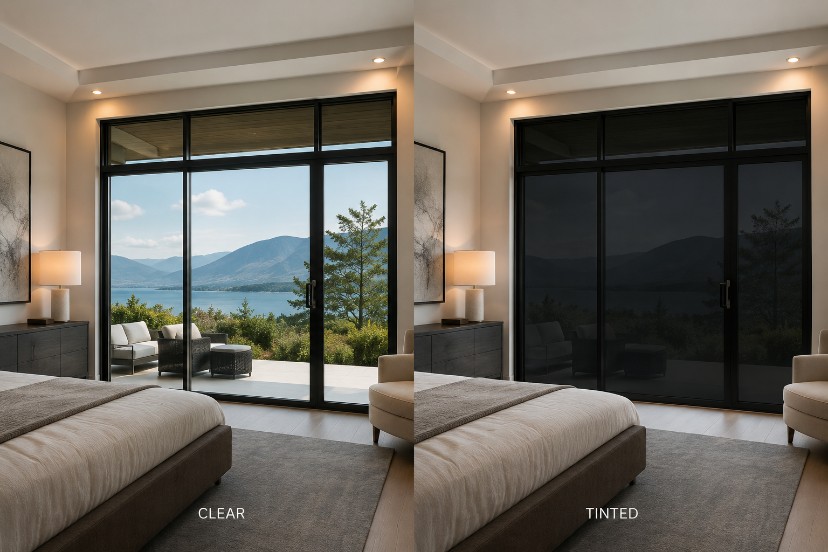
Imagine standing in your living room on a bright July afternoon. The sun streams through your panoramic windows, heating the space to uncomfortable levels despite your air conditioning running full blast. You’re not alone. According to the U.S. Department of Energy, heat loss and gain through windows costs American homeowners more than $40 billion annually and accounts for roughly 4 quads of combined heating and cooling energy use across the nation.
For decades, we’ve accepted static windows as a necessary compromise—fixed panes that either let in too much light or block your view entirely. But glass technology has evolved. Today’s electrochromic windows can tint automatically, adapting to sunlight in real-time while preserving your connection to the outdoors. This isn’t science fiction; it’s dynamic glazing, and it’s transforming how we think about residential design.
In this guide, you’ll discover how smart glass works, what it costs, and whether it’s right for your home.
Smart Glass Technology: Electrochromic Windows in Residential Design
What Is Smart Glass? Defining Electrochromic Technology
Smart glass represents a fundamental shift from passive building materials to active environmental controls. Unlike traditional glazing that remains fixed throughout its lifetime, smart glass—also called dynamic glazing or switchable glass—responds to changing conditions by altering its optical properties on demand.
The U.S. Department of Energy defines electrochromic windows specifically as “glazing systems that use electricity to change light and solar transmittance.” This distinguishes them from conventional low-emissivity (low-e) coatings, which reflect heat continuously without adjustment.
What makes a window truly “smart” in residential contexts? It’s the ability to modulate between transparency and opacity—or in the case of electrochromic technology, between clear and tinted states—based on environmental cues or occupant preferences. This responsiveness addresses the classic architectural dilemma: maximizing natural daylight while minimizing heat gain and glare.
The evolution from static to dynamic glazing mirrors broader trends in building technology. Where single-pane glass gave way to insulated units, and those later incorporated gas fills and low-e coatings, today’s glass technology incorporates microscopically thin active layers that can shift their tint electronically. Lawrence Berkeley National Laboratory notes that these systems use an electric signal to control tint levels, allowing the glass to darken when you need protection from sunlight and clear when you want illumination or passive solar heat gain.
For homeowners, this means windows that work with your HVAC system rather than against it. In summer, the glass can tint automatically to block solar heat, reducing cooling loads. In winter, it clears to capture warming sunlight during the day. The technology essentially transforms your home’s envelope from a static barrier into an adaptive climate control surface.
Unlike conventional window treatments that require manual adjustment or motorized shades that block views entirely, electrochromic installations maintain transparency while changing their shading coefficient. As noted by industry observers at Sound Glass, this capability positions dynamic glazing as particularly valuable for modern residential designs featuring large glass walls, corner windows, and open floor plans where traditional solutions would compromise the architectural intent.
The Three Categories of Dynamic Glazing
Dynamic glazing generally falls into three categories. Electrochromic (EC) windows use thin-film electrochemical reactions to vary tint, making them ideal for residential energy efficiency and solar heat management. Suspended Particle Device (SPD) technology contains rod-shaped nanoparticles that align when electrified to control light transmission, offering rapid switching for shading applications. Polymer-Dispersed Liquid Crystal (PDLC) systems switch between translucent and transparent states primarily for privacy control, scattering light when off and clearing when energized. While SPD and PDLC serve specific privacy and immediate shading functions, EC technology remains the primary focus for whole-home energy performance and daylight optimization.
How Electrochromic Windows Work: The Science Behind Dynamic Tinting
The mechanism behind electrochromic glass reads like chemistry brought to life. When you adjust the tint—either manually or through automated sensors— you’re triggering an electrochemical reaction within the window itself. Microscopically thin ceramic layers, sandwiched between glass panes, contain lithium ions that move between electrodes when voltage is applied. This ion migration changes the oxidation states of the materials, altering how much light and heat pass through.
According to manufacturer SageGlass, this process allows the glass to modulate between clear and darkened states, managing both sunlight and thermal energy. The construction typically involves five layers: two transparent conductive coatings, a counter-electrode, an ion conductor, and the electrochromic layer itself. When electricity flows, lithium ions travel from the counter-electrode through the conductor into the electrochromic layer, causing it to darken. Reversing the voltage drives the ions back, returning the window to clarity.
Does smart glass require power? Yes, but less than you might expect. A small electrical current initiates the tint change, while the National Renewable Energy Laboratory notes that minimal power maintains the state once achieved. The system draws more energy during transitions than in steady states, but overall consumption remains low—comparable to a standard LED bulb for an entire wall of windows.
The U.S. Department of Energy documents that switching times range from 5 to 12 minutes for full transitions between clear and tinted states. This gradual shift differs from the instant flick of a light switch; instead, it provides a smooth dimming effect that adjusts as clouds pass or the sun shifts across the sky. For residential applications, this means the windows respond to changing daylight conditions without jarring visual disruptions.
This automated window tinting capability fundamentally changes how homes interact with their environment. Rather than blocking views with blinds or suffering through afternoon glare, the glass itself becomes the shading device—variable, responsive, and invisible when clear.
Power Systems and Control Mechanisms
Integration with residential electrical systems requires low-voltage wiring, typically 24-48 volts DC, running to each window or zone. Controllers process data from photosensors and thermostats to trigger tinting automatically, though manual overrides remain available through wall switches or smartphone apps. During new construction, electricians rough in dedicated circuits to window headers; retrofits require careful routing of low-voltage cables through existing frames. Most systems connect to standard home automation platforms, allowing your windows to coordinate with smart thermostats and lighting controls for whole-house energy management.
Types of Smart Glass for Residential Applications
Choosing the right dynamic glazing depends on whether your priority is energy efficiency, instant privacy, or both. Each technology offers distinct performance characteristics that suit different zones within a home.
Electrochromic windows excel at solar heat management. Their variable tint allows them to modulate the Solar Heat Gain Coefficient throughout the day—high in winter to capture warmth, low in summer to reject it. Lawrence Berkeley National Laboratory confirms that EC windows are commercially available from multiple U.S. manufacturers and have been installed in buildings nationwide, making them a viable option for residential new construction and major renovations.
SPD technology serves different functions. Unlike the gradual tint of electrochromic glass, SPD windows can switch rapidly from clear to dark, providing immediate shade against intense glare. However, they typically require continuous voltage to maintain their clear state and don’t offer the same graduated control for thermal management. They work well for skylights or west-facing windows where sudden sun exposure demands quick response.
PDLC systems, often marketed as privacy glass technology, operate on a binary principle: clear when energized, frosted when off. They scatter light rather than absorbing it, making them perfect for bathroom windows, bedroom partitions, or home office dividers where instant opacity matters more than solar control. However, in the frosted state, they block views entirely while still transmitting considerable heat—less than ideal for exterior walls in extreme climates.
For most residential exterior applications, electrochromic technology provides the best balance. It maintains views in all states, manages thermal loads effectively, and integrates with automated home systems. Interior applications might combine EC for sun-exposed elevations with PDLC for privacy screens. When planning your window design, consider orientation, local climate, and whether you need variable tinting or simple on-off privacy switching.
Understanding Energy Performance: U-Factor and Solar Heat Gain Coefficient
Evaluating any window—smart or conventional—requires understanding two critical metrics: U-factor and Solar Heat Gain Coefficient (SHGC). These numbers appear on the National Fenestration Rating Council (NFRC) labels that the DOE Energy Saver program recognizes as the voluntary standard for measuring window energy performance.
The U-factor measures the rate of non-solar heat flow through a window. As the DOE explains, lower U-factor values indicate higher energy efficiency, meaning less heat escapes during winter months. For cold climates in the northern United States, look for U-factors below 0.25. In mixed or hot climates, anything under 0.30 generally performs well, though electrochromic windows can compensate for slightly higher U-factors by dynamically blocking solar gain.
SHGC represents the fraction of solar radiation admitted through a window, both directly transmitted and absorbed then reradiated inward. Lower SHGC values mean less solar heat transmission—essential for south- and west-facing walls in sunny regions. Higher SHGC values help with passive solar heating in colder northern states during winter.
Here’s where dynamic glazing complicates traditional ratings. The DOE notes significant challenges in rating dynamic glazing with static metrics. An electrochromic window might have an SHGC of 0.60 when clear (excellent for winter heat gain) but 0.10 when tinted (ideal for summer cooling). Static labels can’t capture this range, potentially misleading homeowners who see only one number.
For climate-appropriate selection, consider your region’s heating and cooling demands. In hot southern climates, prioritize low SHGC when tinted. In northern zones, ensure the clear-state SHGC remains high enough to capture winter sun. The beauty of these energy efficient windows lies in their ability to span multiple SHGC values throughout the year, adapting as seasons change rather than forcing a compromise between summer comfort and winter warmth.
Benefits of Electrochromic Windows for U.S. Homes
The case for installing electrochromic technology extends far beyond novelty. For American homeowners facing rising utility costs and increasingly extreme weather, the benefits touch energy bills, comfort, and even health.
Consider the scale of the opportunity. The U.S. Department of Energy reports that U.S. buildings waste over $200 billion of energy each year, with windows representing a significant portion of that loss. Specifically, heat loss and gain through conventional glazing accounts for more than $40 billion in annual costs—roughly 4 quads of combined heating and cooling energy. Dynamic windows fundamentally alter this equation by modulating daylight and solar heat gain to reduce HVAC loads.
The performance data proves compelling. In full-scale testbeds, the DOE documented that EC windows reduced peak cooling loads by 25% to 58% compared to spectrally selective low-e alternatives. Lawrence Berkeley National Laboratory estimates the technical potential for residential buildings at 1.9 quads by 2030—enough to reduce total annual U.S. building energy use by approximately 10% if widely adopted.
Beyond kilowatt-hours, these smart windows for homes deliver tangible quality-of-life improvements. The DOE connects daylight exposure to health and productivity benefits, noting that natural light regulates circadian rhythms and improves cognitive performance. Unlike fixed-tint windows or blinds that block views, dynamic glass allows you to maintain visual connection to the outdoors while preventing glare and excessive heat gain. You get the psychological benefits of daylight without the physical discomfort.
Privacy and security advantages complement the energy story. When tinted, electrochromic windows reduce visibility from outside during daylight hours without sacrificing your view outward. They eliminate the need for external shading devices that require maintenance or internal treatments that collect dust. For homes with challenging exposures—urban infill lots close to neighbors, or rural properties with expansive glass walls facing the setting sun—this dynamic glass residential capability solves problems that static solutions cannot.
Additionally, the technology protects interior furnishings. By blocking ultraviolet light and reducing solar heat gain, these windows extend the life of hardwood floors, artwork, and upholstery that would otherwise fade or degrade from sun exposure. The National Renewable Energy Laboratory confirms that such dynamic systems effectively manage solar radiation throughout the day, providing consistent protection without requiring homeowner intervention or obscuring architectural views.
Quantifying Energy Savings Potential
The numbers tell a clear story. DOE testbeds demonstrate 25% to 58% reductions in peak cooling loads when comparing electrochromic windows to high-performance low-e alternatives. Looking ahead, Lawrence Berkeley National Laboratory projects 1.9 quads of technical potential for residential applications by 2030—representing massive energy savings if adoption scales. These aren’t theoretical laboratory results; they reflect real-world performance in occupied buildings where automated tinting responded to actual weather conditions and occupancy patterns.
Health, Comfort, and Daylighting Advantages
Natural light drives human health. The DOE emphasizes that daylight exposure improves productivity and comfort while supporting circadian rhythms. Electrochromic windows make this possible in previously problematic spaces—west-facing family rooms, home offices with computer screens, or bedrooms requiring morning light without afternoon heat. The dynamic tinting adjusts automatically, preventing the glare that causes eye strain while admitting beneficial illumination. You maintain your view of the landscape, avoid the claustrophobia of drawn shades, and still keep the room at a comfortable temperature.
Cost Analysis and Installation Realities
Innovation carries a premium. While conventional high-performance windows retail for roughly $15 to $30 per square foot, electrochromic systems currently range from $50 to $150 per square foot according to DOE data. For a typical 3,000-square-foot home with extensive glazing, this represents a significant investment above standard construction costs.
However, as the DOE data highlights, these advanced window systems can reduce HVAC equipment sizing requirements and ongoing utility expenses. In new construction, smaller cooling systems often offset part of the window premium. In retrofits, the value proposition depends on existing HVAC efficiency, local electricity rates, and the specific orientations being upgraded.
Installation complexity adds another consideration beyond material costs. Unlike standard replacement windows, electrochromic units require electrical wiring to each pane or zone. New construction allows for easy integration during framing, with low-voltage wiring run to window headers before drywall installation. From our experience, retrofits demand creative solutions—either surface-mounted wire channels or fishing wires through existing walls. The DOE also notes that extra installation and electrical work can add substantial cost to the project, particularly in older homes without modern electrical service.
Realistic expectations about performance limitations matter too. The 5 to 12 minute switching time documented by the DOE means these windows won’t instantaneously block a sunbeam moving across your desk. They optimize for thermal comfort over immediate glare elimination. For sudden privacy needs, supplemental window treatments remain necessary.
Long-term durability concerns also influence the financial calculation. The Department of Energy references ASTM E-2141 and E-2953 standards for accelerated aging methods specific to dynamic glazing. These protocols test how thin-film electrochromic layers withstand thermal cycling, UV exposure, and voltage fluctuations over simulated decades of use. Reputable manufacturers design their window design specifications to meet these rigorous standards, offering warranties that typically extend 10 to 20 years—comparable to high-quality conventional windows but with the added complexity of electronic components.
Understanding ASTM Durability Standards
ASTM International standards E-2141 and E-2953 establish testing protocols specifically for electrochromic and thermochromic glazing. These accelerated aging methods subject windows to extreme temperature fluctuations, humidity cycles, and prolonged UV exposure to simulate years of weathering in compressed timeframes. For homeowners, compliance with these standards provides confidence that the thin-film layers and electrical connections will maintain performance through seasonal expansion and contraction. The DOE cites these standards as crucial benchmarks for predicting long-term reliability, ensuring that your investment in dynamic glazing continues delivering energy savings and comfort well into the future.
Selecting Smart Windows and Preparing for the Future
As you evaluate options for your project, start with control systems. Most manufacturers offer automated tinting controlled by photosensors and thermostats, manual wall switches, or smartphone integration. Automated systems maximize energy savings by responding to real-time conditions without requiring your attention. Manual controls provide immediate gratification for specific activities—dimming for movie watching or clearing for detailed tasks. Many homeowners prefer hybrid approaches with automated defaults and override capabilities.
Shopping for products requires verifying manufacturer credentials. Lawrence Berkeley National Laboratory confirms that multiple U.S. manufacturers currently offer commercial electrochromic windows, giving buyers domestic options for support and warranty service. Request specific performance data for both clear and tinted states, ensuring the U-factor and SHGC ranges match your climate zone. Coastal homeowners should verify salt-spray resistance; those in hurricane zones need impact-rated units.
The trajectory of glass technology points toward increasing sophistication. As noted by Advanced Window Products, we’ve progressed from single panes to insulated units, then to low-e coatings, and now to dynamic systems. Future generations may incorporate photovoltaic cells to power their own tinting, or integrate with grid-responsive smart home systems that adjust based on utility pricing signals.
For now, selecting these smart windows for homes means embracing a transitional technology—one that bridges traditional construction with the responsive buildings of tomorrow. Whether you’re renovating a historic property with problematic solar gain or designing a modernist retreat with floor-to-ceiling views, electrochromic technology offers a path to comfort without compromise. The windows of the future aren’t just openings in walls; they’re active climate control elements that respond to your needs while reducing your energy footprint.
Frequently Asked Questions About Electrochromic Windows
Q: How long do electrochromic windows last? A: Reputable manufacturers design their smart windows to meet ASTM E-2141 standards for durability, testing them for tens of thousands of tinting cycles. They typically offer warranties of 10-20 years, which is comparable to high-end conventional windows.
Q: Can smart glass be installed in an existing home? A: Yes, retrofitting is possible, but it is more complex than a standard window replacement. It requires running low-voltage wiring to each window, which can increase installation costs and time compared to new construction.
Q: Do electrochromic windows use a lot of electricity? A: No. They use a very small amount of electricity to change tint and minimal power to maintain a state (either clear or tinted). The energy consumption for an entire home’s smart windows is often compared to that of a single LED light bulb.
Electrochromic windows represent more than an upgrade—they signal a fundamental rethinking of how our homes interact with the natural environment. As you consider your options, remember three essentials: these systems offer proven energy savings of 25% to 58% on peak cooling loads, they provide unique health benefits through optimized daylighting, and they require careful evaluation of upfront costs against long-term HVAC savings.
The technology has matured from laboratory curiosity to a commercially available reality. As building material experts, we’ve seen multiple U.S. manufacturers bring products to market that meet rigorous ASTM durability standards. While the initial investment exceeds conventional windows, the combination of reduced utility bills, enhanced comfort, and preserved views creates value that static glass cannot match.
Ready to explore whether dynamic glazing fits your project? Consult with a certified installer who understands your local climate, and take the first step toward windows that work as smart as you do.